Thursday, 30 March 2017

Saskatchewan


Saskatchewan

Capital Regina
Largest city Saskatoon
Area
• Total 651,900 km2 (251,700 sq mi)
• Land 591,670 km2 (228,450 sq mi)
• Water 59,366 km2 (22,921 sq mi)  9.1%
6.5% of Canada
Population
• Total 1,098,352
• Density 1.9/km^2 (5/sq mi)
Official languages English
• Total (2015) C$79.415 billion
• Per ca-pita C$70,138 (4th)
Saskatchewan is a prairie and arboreal province in west-central Canada, the only province without natural borders. It has an area of 651,900 square kilometers (251,700 sq mi), nearly 10 percent of which (59,366 square kilometers (22,900 sq mi)) is fresh water, composed mostly of rivers, reservoirs, and the province's 100,000 lakes.
Saskatchewan is bordered on the west by Alberta, on the north by the Northwest Territories, on the east by Manitoba, to the northeast by Nunavut, and on the south by the U.S. states of Montana and North Dakota.
Saskatchewan is a landlocked province with large distances to moderating bodies of waters. As a result, its climate is extremely continental, rendering severe winters throughout the province. Southern areas have very warm or hot summers. Midale and Yellow Grass near the U.S. border are tied for the highest ever recorded temperatures in Canada with 45 °C (113 °F) observed at both locations on July 5, 1937. In winter, temperatures below −45 °C (−49 °F) are possible even in the south during extreme cold snaps.


Saskatchewan has been inhabited for thousands of years by various indigenous groups, and first explored by Europeans in 1690 and settled in 1774. It became a province in 1905, carved out from the vast North-West Territories, which had until then included most of the Canadian Prairies. In the early 20th century the province became known as a stronghold for Canadian social democracy.
Etymology
Its name derived from the Saskatchewan River.
Geography
As Saskatchewan's borders largely follow the geographic coordinates of longitude and latitude, the province is roughly a quadrilateral, or a shape with four sides. However the 49th parallel boundary and the 60th northern border appear curved on globes and many maps. Additionally, the eastern boundary of the province is partially crooked rather than following a line of longitude, as correction lines were devised by surveyors prior to the homestead program (1880–1928).
Saskatchewan contains two major natural regions: the Canadian Shield in the north and the Interior Plains in the south. Northern Saskatchewan is mostly covered by arboreal forest except for the Lake Athabasca Sand Dunes, the largest active sand dunes in the world north of 58°, and adjacent to the southern shore of Lake Athabasca. Southern Saskatchewan contains another area with sand dunes known as the "Great Sand Hills" covering over 300 square kilometers (120 sq mi). The Cypress Hills, located in the southwestern corner of Saskatchewan and Killdeer Badlands (Grasslands National Park), are areas of the province that were unglaciated during the last glaciation period, the Wisconsin glaciation.
The province's highest point, at 1,392 meters (4,567 ft), is located in the Cypress Hills less than 2 km from the provincial boundary with Alberta. The lowest point is the shore of Lake Athabasca, at 213 meters (699 ft).
Climate
Saskatchewan receives more hours of sunshine than any other Canadian province. The province lies far from any significant body of water. This fact, combined with its northerly latitude, gives it a warm summer, corresponding to its humid continental climate in the central and most of the eastern parts of the province, as well as the Cypress Hills.
Saskatchewan is one of the most tornado-active parts in Canada, averaging roughly 12 to 18 tornadoes per year, some violent. In 2012, 33 tornadoes were reported in the province.

The hottest temperature ever recorded anywhere in Canada happened in Saskatchewan. The temperature rose to 45 °C (113 °F) in Midale and Yellow Grass. The coldest ever recorded in the province was −56.7 °C (−70.1 °F) in Prince Albert, which is north of Saskatoon.


Resultado de imagen de saskatchewan

Resultado de imagen de saskatchewan


Resultado de imagen de saskatchewan


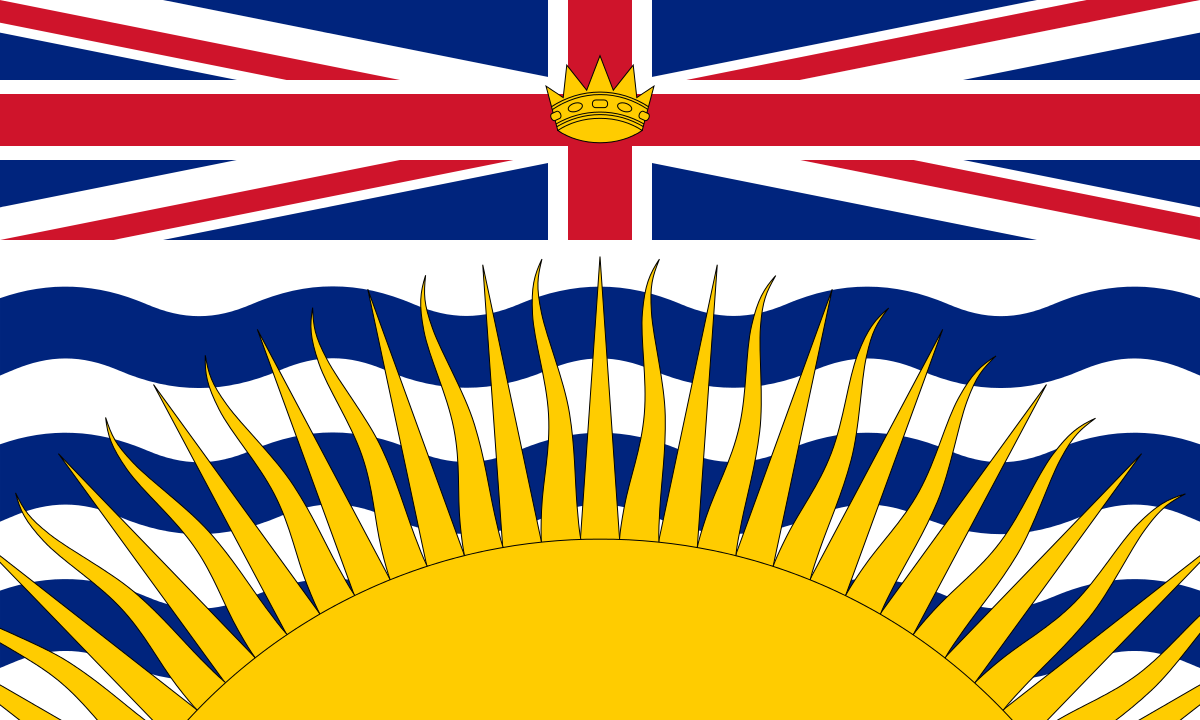
BRITISH COLUMBIA

British Columbia is Canada’s most westernly province, and its third largest.


Resultado de imagen de british columbia


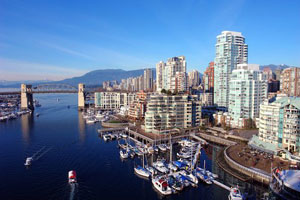
It has a population of more than 4 million people that lives mostly on the coast. Its capital is Victoria, but the largest city is Vancouver.

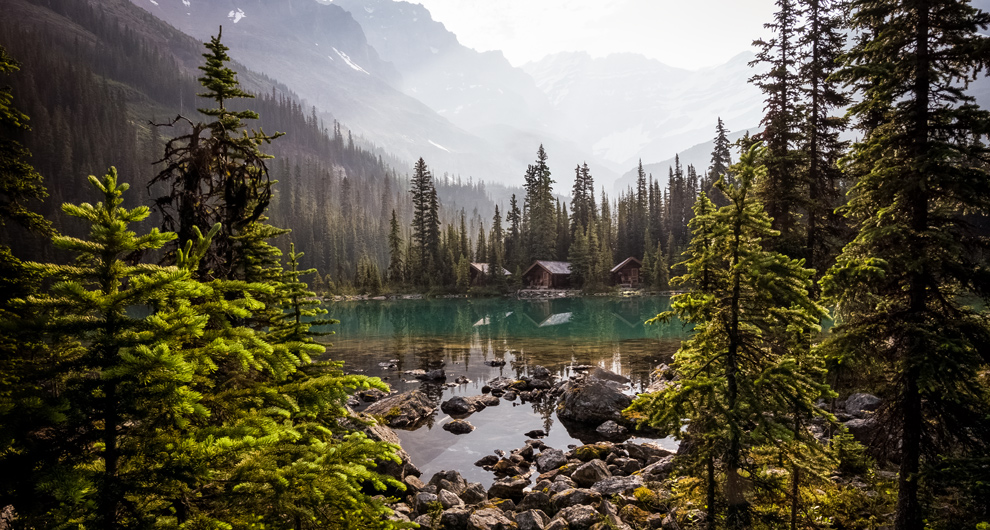
British Columbia can be divided into two parts: the coast (where most people live) and the interior. This makes the province a land of diversity and contrast, because it has coastal landscapes and snowy mountains as well as plains and forests.

Resultado de imagen de british columbiaResultado de imagen de british columbiaResultado de imagen de british columbia

Imagen relacionada


Due to its distance from the eastern coast of Canada and the barrier created by the mountains, this land was very difficult for early Europeans to reach and was the last part of North America they explored.
The first permanent European settlement came in the early 19th century.

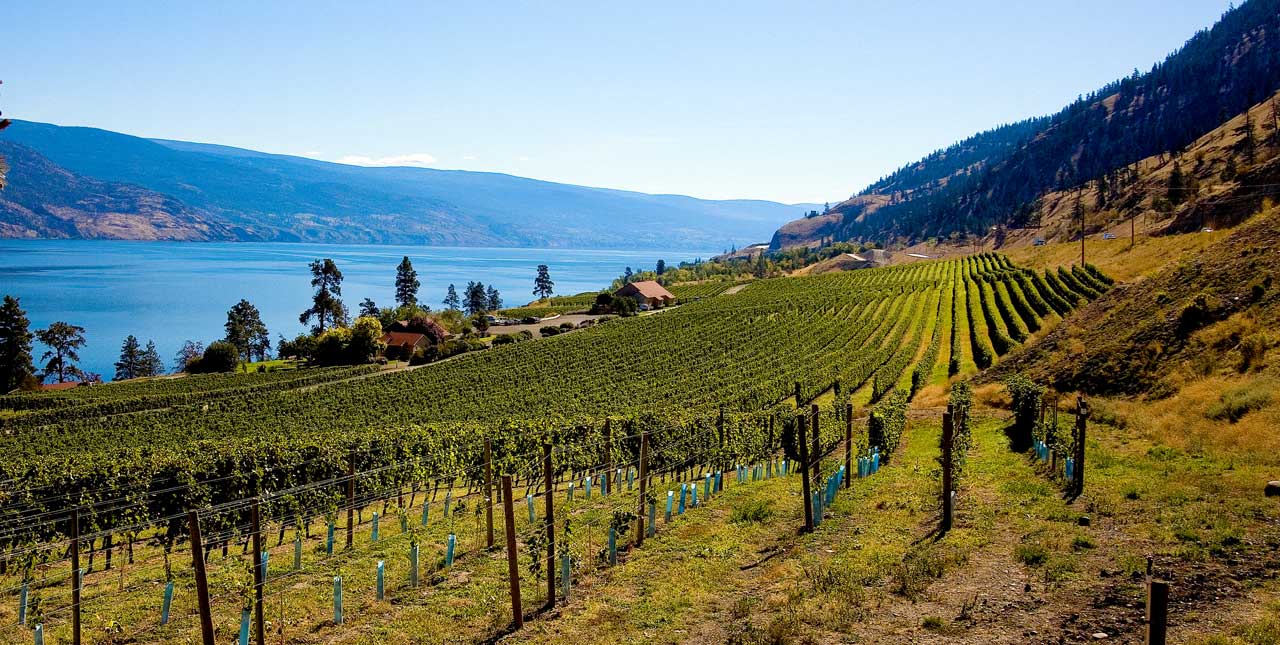
One of the main components of British Columbia economy during the 20th century was forestry, and it continues playing an important role in it as well as agriculture, specially berries, nuts, fruits and wine-grapes. Mining is also an important piece of its economy.

Wednesday, 15 March 2017

NARWHAL AND POLAR BEAR SAFARI


NARWHALL AND POLAR BEAR SAFARIResultado de imagen de narwhal and polar bear
Have you ever heard about Nunavut?
In this place much of the land is permanently frozen. The city of Nunavut occasionally experiences freezing winters. If you visited it, you would need cosy clothes to wrap up.
The Narwhal and Polar Bear Safari is the perfect adventure for both first time visitors to the NUNAVUT. Spend your days observing a wide variety of Arctic wildlife in their natural habitat including narwhals, polar bears, seals, and a variety of bird species, offering you exceptional opportunities for impressive photographs!
Resultado de imagen de narwhal and polar bear safari Canada

Imagen relacionada

This activity includes unlimited use of motor sleds during the trip, all accommodations, all meals  in camp.
It consists of a visit to the traditional Inuit hunting grounds.  You should photograph polar bears and relax in a comfortable base-camp located near the edge of two-metre-thick iced sea


During the visit there are many unforeseen events. If you climb on one of the motor sleds you can fall to the ice and hurt you anywhere part of  your body, so i recommed you go well protectects with layered clothes.

You can not miss this experience, come and check it out!


Tuesday, 14 March 2017

Sponge hochey in Winnipeg


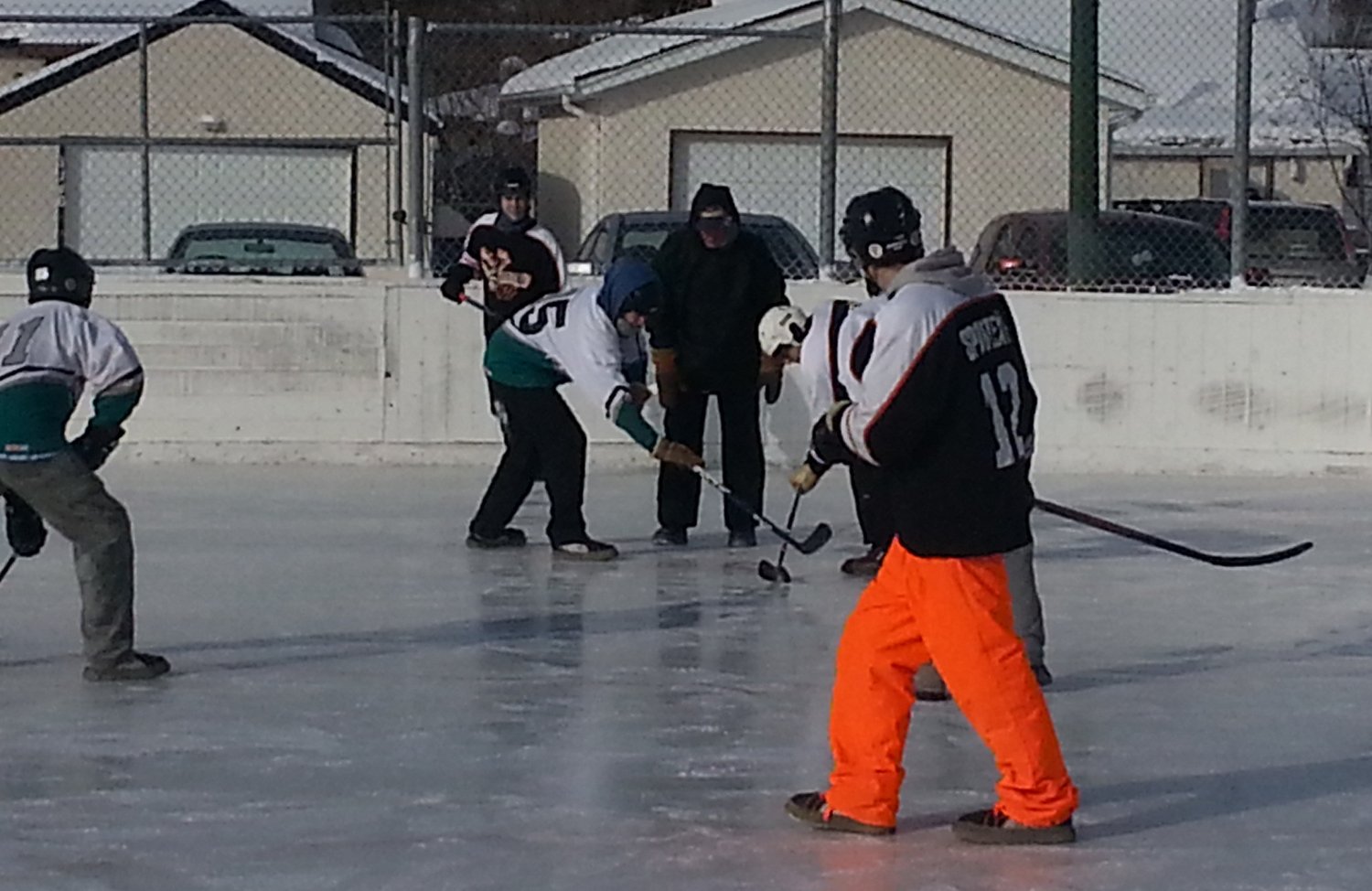
If I went to Winnipeg,I would play sponge hockey ,because it´s great.
Well, the activity is only practised in Winnipeg.
It is the capital of the province of Manitova and it has a great number of inhabitants.

If you travelled from Spain,as I would do, you would take a plane. It is expensive, so you have to save much money.

If you are interested in this sport , i will tell you more about it.
The activity is played by 6 players versus other six players in a court (40x20).
Remember that It is only played in summer. You need a helmet, gloves and knee pods. I don´t know how much it is costs, but i think that it is cheap and i hope that because if it is expensive i will not play this sport.

Finally, if you are bad in games with hockey, you will play bad sponge hockey. And if you are bad, you will have more possibilities of meeting with an accident than a best player.
I think that this sport is cool.

Whale watching tours

Whale watching in British Columbia is an amazing experience. You`ll love it!!! There you can watch orcas (killer whales), humpback, pacific grey whales; all in their natural habits.
You can try out it in Vancouver. Vancouver is a great city whit many places that you can see.


Resultado de imagen de vancouver


The season to see the whales is in spring and summer, the whales usually stay in the pacific ocean between the continent and the vancouver´s island.

The boats go twice a day (one in the morning and one in the afternoon). They are smalls not to scare the whales.

The travel last 3 hours aprox. When they arrive they switch off the engine and they can´t be there more than 30 min.

The travel costs 120$. It isn´t expensive compared to the surprising experience.


we recommed you to live this great experience!! You can only live it  once!!!!

Monday, 13 March 2017

Banff National Park


Did you know that the Banff National Park is the oldest national park of Canada? Banff National Park is located in the province of Alberta in the Canadian Rocky Mountains. Alberta has got a mild temperature. You can go there by different means of transport like car, plane, bus or rail. 


Mostrando imagen 2.jpg


Which activities can you practise? You can practise several activities, atractions include Upper Hot Springs, a golf course with 27 holes! This is in the Fairmont Banff Springs Hotel. Besades there are three ski resorts! You can go excursions too. Other activities are for example nordic ski, alpine and walks on horse. You'll have a great time!

Mostrando imagen 1.jpg


The activities you can do in there are backpacking, boarding, fishing, skiing, waterfall ice climbing and you can go in spring summer or in winter and the most important thing is:that now i free to enter so if you want to go do it now or you have to pay


Sunday, 12 March 2017

Trip to Niagara Falls


Do you know that the Niagara Falls have been  iluminated since 1925? I saw the Niagara Falls in the night. It´s amazing! 
The Niagara Falls are in the border between the USA and Canada. You can get to the Falls by car and bus.

The main activity is a ferry trip in this awesome landscape. You don´t need any special clothes just raincoat. I recommend this activity in summer, because we have a lot of hours of sunlight. The ship has capacity for 50 people. And one trip costs $25 and children free.

In the boat you can cheer up and enjoy the views. My only advice is, be carefull with the wáter, don't wet. And if you go in autum or in winter you will fall in the deck and broke a leg or an arm. Be carefull!!!